

Amidst militia fighters from the brutal Rapid Support Forces (RSF) overrunning the largest city in Sudan's western region – perpetrating widespread killings, sexual assaults and ethnic cleansing with arms supplied by the United Arab Emirates – the NBA’s annual Emirates NBA Cup tipped off on Halloween night, proudly sponsored by the identical Gulf state.
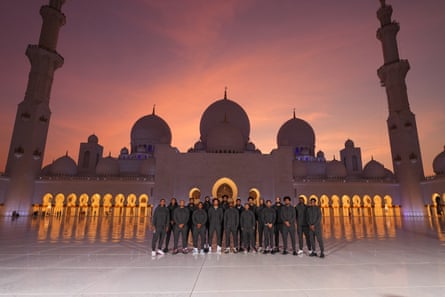
A Deepening Alliance Amidst Crisis
The tournament represents the clearest illustration of the league's expanding partnership with the UAE – an alliance that includes yearly exhibition matches in Abu Dhabi, a lucrative agreement with Emirates airlines, and proposals for a new NBA Global Academy at a university campus in Abu Dhabi.
Larger deals could follow. Reports indicate the NBA is pursuing Abu Dhabi’s funding in a proposed NBA-branded European league, which could launch as soon as 2027.
This flourishing partnership has proven beneficial for both sides: the NBA has gained a wealthy backer, while the UAE has found a willing partner to help further normalize its authoritarian government, especially as it faces allegations of fueling genocide in Sudan.
The Emirates' Controversial Record
Beneath its façade of opulence and progress, the UAE enforces silence with an iron fist. Critics and human rights advocates languish in prisons on trumped-up accusations, punished for challenging the state. The nation’s economic prosperity is built by migrant laborers, who constitute a vast majority of the workforce and who toil with limited protections and minimal options against abuse.
Its influence extends into more violent conflicts abroad. A growing body of reports links the Emirati government to Sudan’s RSF, the paramilitary faction behind many of the atrocities and war crimes being committed in Sudan.
The Tragedy of Sudan's Civil War
The nation's internal conflict began in April 2023, when hostilities between the national army and the RSF plunged the country into a state of full-scale warfare. Urban centers such as the capital Khartoum were transformed into war zones, devastating essential services and creating the most severe displacement crisis.
With the conflict approaches its third year, death toll estimates differ significantly. Aid agencies have documented thousands of fatalities. Other analyses suggest the toll could be far greater, with tens of thousands killed as a direct result the fighting.
This war has also been marked by appalling acts such as sexual violence, torture, mutilation and targeted persecution. This was vividly demonstrated when a key stronghold in Darfur fell to the RSF. The militia embarked on a campaign of slaughter so severe that images of the violence was visible from space.
Since the start of the war, the Emirates have reportedly financed and equipped the paramilitary group, effectively sponsoring the its atrocities. Sudan’s authorities have even brought a case to the world court accusing the UAE of genocidal complicity. In spite of significant proof to the opposite, the UAE persistently rejects any role in the conflict.
Image Laundering and Global Apathy
In recent months, the UAE has hosted high-profile tournaments in cricket, basketball, UFC, and Formula 1. Next come golf and padel tournaments. With rare exceptions, sports entities have not attempted to dissociate from the controversial Gulf state.
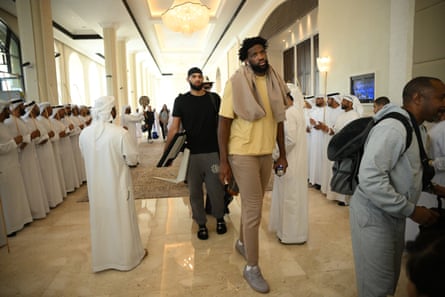
The UAE has gained significantly from the sports world’s inaction. Investments in soccer teams, cricket, and other ventures have rebranded the ruling family as astute businessmen rather than authoritarian rulers.
And yet, the continuing slaughter in Darfur has garnered some rare bad publicity for the UAE. Some supporters have even condemned their club’s owner for the alleged involvement in the Sudan conflict.
A Call for Responsibility
The silence around the NBA’s new partnership with the UAE is concerning. One of the few to call out the NBA for normalizing the UAE’s role is a humanitarian organization that advocates for the rights of refugees. Their message read: “The Emirates NBA Cup should highlight the positive aspects in everyone. Instead, it’s being used to sportswash crimes fueled + funded by the UAE in Sudan. The NBA shouldn’t let itself to be a tool in the UAE’s rehabilitation of human suffering.”
Nevertheless, sports teams and leagues seldom end lucrative partnerships without resistance. At a European soccer giant's recent assembly, an activist who once spearheaded a successful campaign to end a similar partnership with another nation was heckled by attendees after voicing objections about a new agreement with the UAE’s airline.
The activist accused the club of “propping up the reputation of questionable governments” and cautioned that the deal could inflict “long-term harm to the standing of our club”. For his comments, he was openly mocked by the club’s chief executive.
This incident highlights how effective the Gulf state’s brand management efforts have been, making criticism seem unwelcome even within renowned sports institutions.
A Concluding Reflection
One should not expect the NBA, which also maintains ties with other controversial regimes, to publicly address the UAE’s human rights record … but imagine if they did. Imagine if genocide, war crimes and systemic repression were red lines for global sports.


